
A covered pergola is a simple solution for enjoying your outdoor living space despite Washington’s persistent rain and UV rays. It functions as a permanent shade structure or patio cover, extending the usability of your garden or deck year-round. Unlike open structures, a covered pergola uses solid materials like polycarbonate roof panels or a louvered roof system to create dry outdoor rooms.
This addition provides shelter for your outdoor kitchen or fire pit. For a hands-on building project, pergola kits or DIY pergola plans are popular. Choose materials like strong aluminum shade structures or traditional cedar pergolas. They protect from UV rays and match your home’s landscape.

Life+Land Lessons
- A covered pergola, like a louvered roof system, extends your outdoor living season in rainy climates.
- Prioritize placement to balance sun exposure, block UV rays, and manage rain runoff away from your home.
- Decide between an attached or freestanding 1-block pergola based on desired use and integration with your outdoor kitchen.
- Select durable, weather-resistant materials such as western red rough-sawn cedar or an aluminum shade structure.
- Secure all vertical posts with robust anchoring hardware to withstand high wind gusts and snow loads.
- Choose a roof type, from polycarbonate roof panels to a retractable canopy, that meets your light and rain protection needs.
- Obtaining the proper permits for your building project prevents costly legal issues and protects your investment.
- Incorporate LED lights and power outlets to create a functional outdoor living room suitable for outdoor entertainment.
- Use climbing plants and decorative shade panels to soften the structure and add a layer of privacy.
- Factor in all costs, including pergola kits, installation labor, and outdoor furniture, for a complete budget picture.
Table of Contents
Choose the Right Location for Maximum Comfort and Impact
Proper placement maximizes the value of your patio pergola. The location determines how well your structure functions as an outdoor living room and a defense against the weather. Thinking through sun and rain patterns now prevents disappointment later.

Evaluate Sun Exposure and Rain Runoff Patterns
Observe how UV rays hit your outdoor living space throughout the day. A shade structure should block harsh afternoon sun while allowing pleasant morning light. In the rainy Pacific Northwest, patio cover placement must account for water management. The roof system must direct rain runoff away from your home’s foundation and into a proper drainage area, protecting your outdoor entertainment area.
Decide Between an Attached or Freestanding Structure
Deciding between an attached or Freestanding 1-Block pergola comes down to use and structural needs. The attached structure uses the house for support and is excellent for a patio kitchen extension. A freestanding option, perhaps featuring a 6×6 frame, provides flexibility. You can position it near a fire pit or a koi pond to create a distinct gathering spot, forming independent outdoor rooms.
Integrate the Pergola with Existing Outdoor Spaces Like the Patio
The pergola should flow seamlessly with adjacent areas, such as travertine decks or a lawn. Consider the path from the house to the new outdoor living area. Using consistent outdoor furnishings and materials helps create a cohesive look. Proper integration makes the Patio Pergola feel like a natural part of your home’s exterior.
Select Pergola Materials That Defy the Pacific Northwest Rain
The moist climate demands weather-resistant materials for your patio cover. Choosing the right structural parts affects how long the pergola lasts. It also affects how much maintenance it needs. Durability against constant dampness is a primary concern for any building project.
Use Western Red Cedar or Redwood for Moisture Resistance
For classic looks, western red rough-sawn cedar and redwood offer natural resilience against decay. A cedar pergola looks beautiful and smells nice. It matches the style of the region. Wood options will require periodic sealing. You may also consider pressure-treated southern yellow pine as a budget-friendly option.
Consider Low-Maintenance, Rust-Proof Aluminum or Vinyl Options
An aluminum shade structure or vinyl pergola system is nearly maintenance-free. Aluminum offers superior protection against storm damage and will not rust. These options often come as easy-to-assemble pergola kits.
A local store in the greater Seattle area recently utilized aluminum outdoor frames for a new outdoor living space. The client wanted maximum uptime and minimal upkeep, a challenge in the constant rain. The metal shade structure provided the modern look and long-term resilience they needed.
Build a Strong Foundation to Prevent Movement in Windy Conditions
The vertical posts must be securely anchored to withstand high wind gusts and support potential snow loads. Using heavy-duty galvanized post brackets is good practice. Even a simple structure like a freestanding 1-block pergola needs a strong foundation. This keeps it stable over time.
Table 1: Material Comparison for Covered Pergolas
| Features | Aluminum Shade Structure | Western Red Rough-Sawn Cedar | Pressure-Treated Southern Yellow Pine |
| Initial Cost | Higher for Louvered Roof System | Moderate to High | Lower to Moderate |
| Maintenance | Very Low (Rust-Proof) | High (Requires sealing/staining) | Moderate (Requires sealing/staining) |
| Longevity | Excellent (Residential Warranty often applies) | Very Good (Natural decay resistance) | Good (Treated to resist rot) |
| Esthetic | Modern, Sleek | Traditional Outdoor, Natural Cedar Wood look | Standard, Paintable |
| Weather Resistance | Excellent against rain and UV rays | Good, but wood may crack or warp over time | Good, chemically treated |
Find the Best Covered Roof for Rain Protection and Light Balance
The roof is the defining element of a covered pergola, especially for outdoor living in a wet climate. The goal is complete rain protection without sacrificing natural light. Selecting the right covering keeps your outdoor furnishings and outdoor kitchen dry.
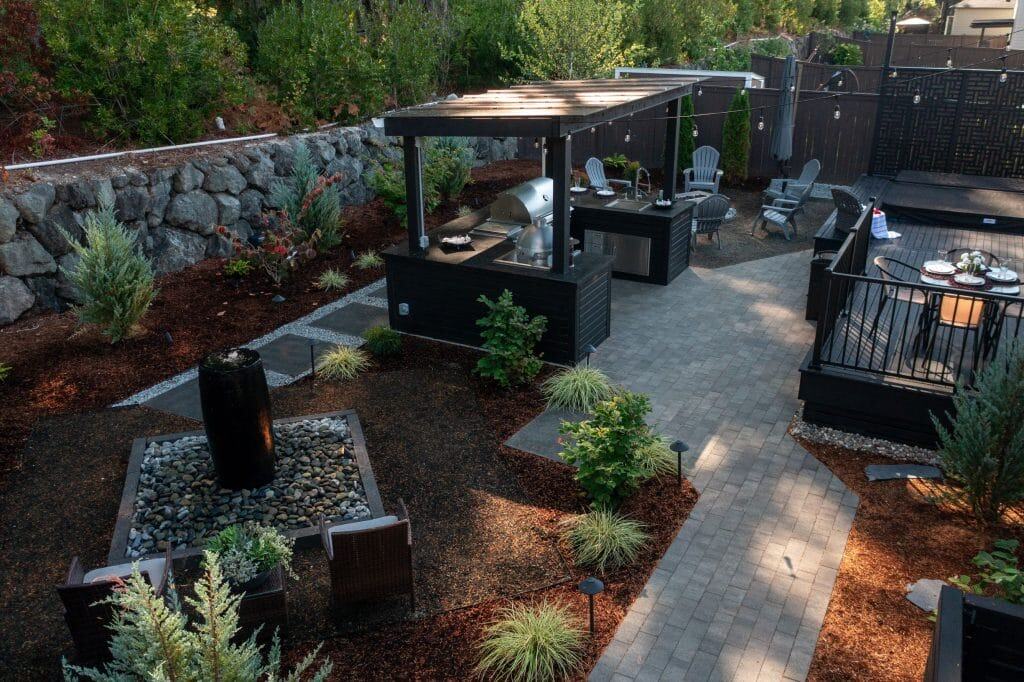
Install Fixed Clear or Tinted Polycarbonate Panels
Polycarbonate roof panels are a popular and practical choice for a patio cover. They offer excellent UV protection and allow light to filter through, preventing your outdoor living space from feeling too dark. Look for the following options:
- Corrugated solar polycarbonate for a simple, light-diffusing look.
- Clear panels for maximum brightness.
- Tinted panels to reduce glare and heat buildup.
Utilize a Motorized or Manual Retractable Canopy
A retractable canopy gives you the most flexibility. A ShadeFlex motorized canopy or a manual tensioned canopy lets you fully open the roof. You can sunbathe or watch the stars. Pull the canopy closed instantly to protect your outdoor rooms from a sudden downpour, providing reliable shade canopy function.
Use Louvered Roof Systems for Adjustable Sun and Rain Control
The louvered roof system offers a sophisticated solution. Louvered roofs have adjustable slats. These slats are often made of aluminum or louvered fiberglass pergola material. You can tilt the louvers to block UV rays and regulate airflow, or close them fully to create a waterproof roof for your Patio Pergola.
Table: Roof System Options for Rain and Light Control
| Roof System | Rain Protection | Light/Air Control | Best For |
| Louvered Roof System | Excellent (waterproof when closed) | Fully Adjustable (Manual or Motorized) | Seamless blend of sun and shade, modern esthetic |
| Polycarbonate Roof Panels | Excellent (Solid Barrier) | Fixed Light Filtration (UV protection) | Maximizing light beneath Patio Cover without rain |
| Retractable Canopy | Excellent (When extended) | Flexible (Can fully open or close) | Providing ultimate flexibility and ventilation with AirFlow Mesh |
| Shade Sails | Minimal to Moderate | Fixed Shade (UV rays blockage) | Decorative accent and light rain buffer, open feel |
Avoid Costly Mistakes by Getting the Proper Building Permits
Ignoring local regulations can halt your building project and result in fines. Permits confirm your patio pergola or patio cover meets safety standards for wind gusts and snow loads. Always check your city’s local ordinance before starting.
Local Washington State Building Code Requirements
Building codes set rules for construction. They include the needed size of vertical posts and the right anchoring hardware. Codes are in place to protect your investment and neighbors. The regulations for permanent structures often vary based on whether the structure is attached or a freestanding 1-block pergola.
Determine if Your Project Requires a Permit or City Review
Many counties require permits for any shade structure that is attached to a house or exceeds a certain size or height. A covering, such as a louvered roof system, often triggers the need for a permit review. The cost of permit fees is minimal compared to the expense of tearing down an unpermitted structure.
- Check with your local planning department.
- Note that pergola sizes or dimensions exceeding a certain threshold typically require approval.
- Projects including electrical work, like installing LED lights or a ceiling fan, require separate permits.
Prepare a Simple Site Plan Showing Setbacks and Property Lines
A site plan is a simple drawing showing where the pergola will sit relative to your house and property boundaries. It confirms you meet local setback requirements. Professional 3D renderings can help you visualize the final placement.
Transform Your Covered Pergola into an Outdoor Living Room
Your covered pergola becomes a true extension of your home when thoughtfully furnished and equipped. Creating distinct outdoor rooms allows for maximum comfort and utility within your outdoor living space.
Install Strategic Outdoor Lighting to Extend Evening
Use LED lights are a necessary addition for evening enjoyment. Install lights on the rafters or around the 6×6 frame to create ambiance and safety. A central fixture, perhaps a ceiling fan with a light kit, distributes air and illumination throughout the gathering space.
Plan for Power Outlets for Entertainment or Outdoor Kitchen Appliances
Plan the electrical wiring when you install the pergola. This prevents problems later. Outlets are needed for everything from your phone charger to outdoor entertainment systems or a refrigerator in your outdoor kitchen.
A homeowner in Bellevue, Washington, faced the challenge of a dark, unused deck. The solution included installing a louvered roof system and running dedicated power lines to the vertical posts. This allowed for a mounted television and a sleek patio kitchen, dramatically increasing the deck’s usable hours.
Incorporate Privacy Screens or Curtains for Seclusion
Add shade cloth curtains or retrievable screens to shield the space from neighbors or harsh low sun. Lattice panels are a permanent feature that offers a degree of privacy while still allowing airflow. These additions define the boundaries of your outdoor living room and block wind.
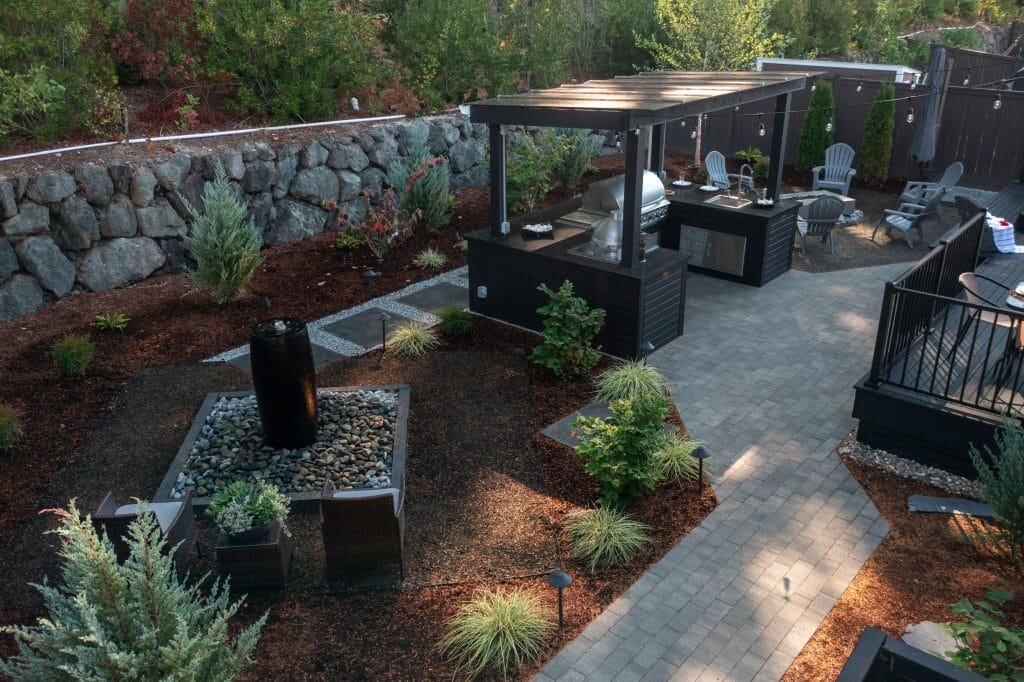
Select Low-Maintenance Plants to Complement Your Covered Structure
Plants soften the lines of a permanent structure like a cedar pergola and add natural appeal to the outdoor living space. Choosing low-maintenance plants reduces gardening work.
Choose Northwest Native Climbing Vines for Vertical Interest
Climbing plants add natural texture to the vertical posts and framing. Consider native species that thrive in the Washington climate, reducing the need for constant care. Native vines also support local wildlife. Allowing these plants to grow up the 6×6 frame or along lattice panels is a great design move.
Use Container Garden Plants on the Pergola Floor
Pots and planters bring flexible color to your outdoor rooms. They are helpful if your pergola is situated over a hard surface like a travertine deck or concrete pillars. Select containers that complement your outdoor furnishings.
- Group pots of varying sizes for visual depth.
- Use a drip system for easy watering beneath the patio cover.
- Rotate seasonal color for year-round appeal.
Train Wisteria or Climbing Hydrangea onto the Structure’s Posts
Vigorous climbing plants, like wisteria or climbing hydrangea, provide dense coverage over the open parts of the framing. You need to guide the plants onto the vertical posts at first. This creates a beautiful, living canopy that fits well with the garden. They will eventually offer some natural UV protection as they mature.
Match Your Pergola Style to Your Home’s Architectural Charm
The pergola should look like a thoughtful addition, not an afterthought. Selecting a style that complements your existing architecture makes your outdoor living space more cohesive and appealing. A well-chosen shade structure boosts the overall appearance of your property.
Opt for a Rustic Wood Design for Craftsman or Traditional Homes
Homes with traditional styling, such as craftsman bungalows common in Washington, pair well with natural wood. A cedar pergola built with western red rough-sawn cedar provides a warm, classic look. These structures, often sourced as Big Kahuna PLUS Pergola Kit components, feel established and grounded. Choosing a wood patio cover reinforces the architectural tradition.
Select a Sleek Metal Finish for Modern or Contemporary Residences
For homes with clean lines and minimalist esthetics, an aluminum shade structure is an excellent fit. Louvered roofs in a dark or light finish offer a contemporary look with high functionality. This choice ensures the patio pergola maintains the sleekness of modern design.
Use Color and Texture to Create a Defined Focal Point
Details like decorative end cuts and hardware matter.
- Choose from the light brown tone of wood or a custom color for an aluminum outdoor structure.
- Match the finish of mounting brackets to your exterior trim.
- Introduce texture with lattice panels or a shade cloth curtain.
These elements combine to make your covered area a true focal point for outdoor entertainment.
Break Down the Project Costs Before Starting Construction
Budgeting correctly stops surprises. It makes your building project a good outdoor living experience. The overall cost of a patio cover depends heavily on choices concerning materials and labor.
Compare the Labor Costs of DIY versus Hiring a Contractor
You can build the pergola yourself using DIY plans or hire a professional. This choice affects your costs the most. Pergola kits are designed for the do-it-yourselfer and save substantially on labor. Hiring a contractor costs more but gives you expert help. They ensure complex structures like louvered roof systems are installed correctly.
Factor in Materials for the Structure, Roof, and Electrical Work
Materials are the largest expense.
- Pergola sizes determine the amount of wood (western red rough-sawn cedar) or metal (aluminum shade structure) you need.
- Polycarbonate roof panels or an advanced louvered fiberglass pergola roof will have different price points.
- Wiring for LED lights and an outdoor kitchen also needs to be allocated.
Allocate a Budget for Furniture and Decorative Elements
Do not forget the items that turn a structure into an outdoor living room. Outdoor furnishings, a fire pit, and potential climbing plants for screening complete the space. Including these accessories in your initial budget provides a clear total picture of your outdoor living space investment.
Frequently Asked Questions
1. Are pergola kits customizable to fit my specific patio area?
Yes, many suppliers offer custom pergola sizes beyond standard options like the 8×12 Shade Canopy. You can often specify your exact post-to-post dimensions to get the perfect fit for your outdoor area.
2. What is the best material for a pergola roof if I want full rain protection?
A modular roof system with solid panels or aluminum louvers protects well from weather. Another option is a flexible ShadeTree Canopy which can be fully retracted or extended for rain coverage.
3. Are there any special deals available for pergola purchases right now?
You should check for current promotions, as many companies run a harvest season sale in the fall. You can find out about specific local store prices and current inventory levels by checking their websites.
4. How can I add privacy and decoration to my existing pergola structure?
Consider adding decorative shade panels or installing shade sails for seclusion and style. These are examples of popular pergola accessories that improve your outdoor living space.
5. What warranties are generally offered on high-quality pergola systems?
Reputable brands often provide a Residential Warranty that covers the frame and finish for several years. Projects like commercial properties may need a special Commercial Warranty. This warranty has specific terms.
6. How difficult is the assembly process for a typical pergola kit?
Many pergola kits USA products, including those from Backyard Discovery, are designed for straightforward home assembly. The instructions provide detailed guidance on the entire pergola assembly process.
Why a Covered Pergola?
Designing your covered outdoor living space starts with a plan tailored to your needs. Pick strong cedar wood or aluminum. Check your pergola size. Choose useful outdoor furniture. A well-planned building project extends your home. Take the first step toward your year-round outdoor room. Book a Free Consultation today.