The most important thing for a natural privacy screen is picking the right evergreen shrubs or evergreen trees that can thrive in the Washington state climate. Our top picks are Leyland Cypress, Thuja Green Giant, and other fast-growing privacy hedge plants like the English Laurel. These privacy trees have a high growth rate each year, so they will give you the privacy fence or noise buffer you want without the long wait. The best way to get a healthy, low-maintenance garden is by matching your plants to your specific USDA Zone and soil type.
Life+Land Lessons
- Choose a fast-growing hedge that suits your specific Washington USDA Zone.
- Proper site preparation makes all the difference for a healthy hedge.
- Correctly space your privacy trees for a dense, complete privacy screen.
- The first year’s watering is the most important for establishing new plants.
- Apply a layer of mulch to conserve moisture and suppress weeds.
- Select broadleaf evergreen shrubs like laurel for a different look and feel.
- Only use clumping bamboo varieties to avoid future containment problems.
- Always check a plant’s mature height before you put it in the ground.
- A local plant nursery offers plants already acclimated to your area.
- A healthy hedge creates a beautiful, long-lasting noise buffer for your home.
Table of Contents
1. Thuja Green Giant
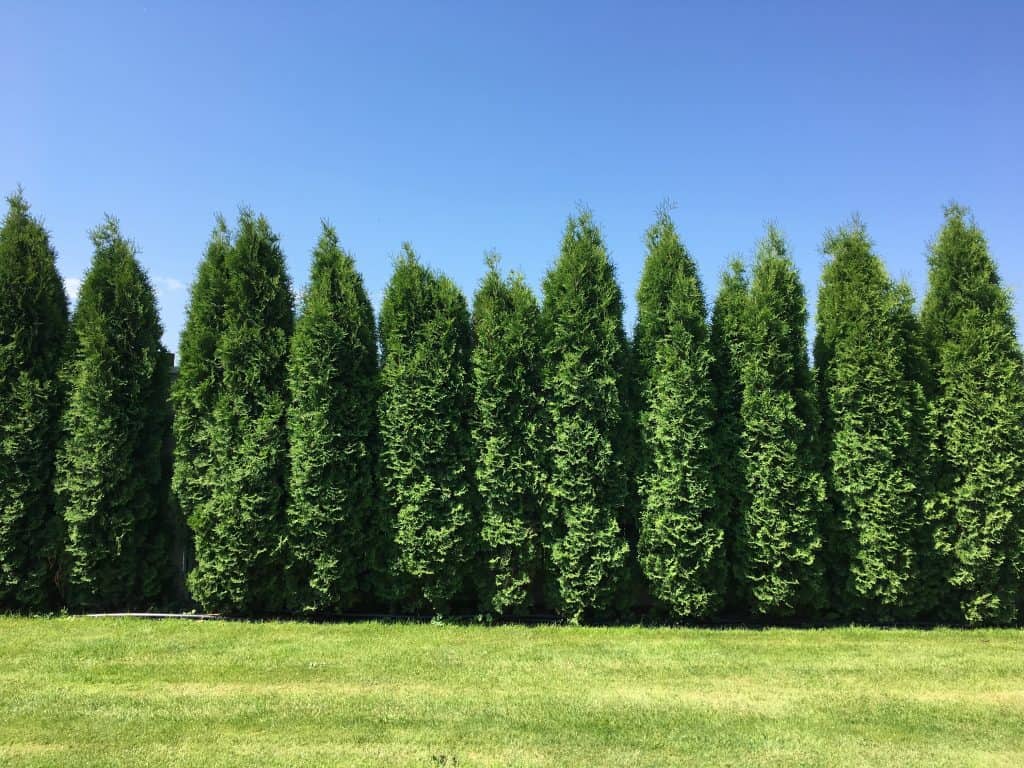
Thuja Green Giant is a hybrid evergreen tree that is a favorite for creating a natural privacy screen in a hurry. Its rapid growth per year, sometimes reaching three to five feet, makes it a top choice for a fast-growing hedge. A fantastic alternative to Leyland Cypress, it provides a dense, consistent barrier. The Thuja Occidentalis hybrid is very hardy. It can grow well in many hardiness zones. This makes it a reliable privacy shrub in both eastern and western Washington state.
It Is a Favorite in Washington State
The Thuja Green Giant stands out for its vigor and adaptability. This privacy tree is not only deer-resistant but also tolerant of both heat and humidity, which makes it a good fit for Washington’s diverse climates. A stately conifer, it maintains its deep green color all year, creating a solid evergreen privacy fence that gives your yard a sense of enclosure and a noise buffer.
Best Way to Plant for Maximum Growth
For a truly fast-growing living wall, proper planting is everything. Dig a hole that is at least twice as wide as the root ball but no deeper. Placing the tree at the correct height prevents problems down the road. Spacing your trees five to six feet apart will allow for a uniform, dense hedge. The right soil type is well-draining, and mixing in some compost will give your plant a great start.
How to Avoid Common Problems
Even a hardy plant can struggle without the right care. Thuja Green Giant can suffer from root rot if the soil is consistently waterlogged, so always test for drainage before planting. Water is most critical during the first year of growth. Browning of foliage can indicate underwatering or, less commonly, an issue with pests. Monitoring your plant and addressing any issues quickly will help it grow to its full mature height and density.
2. Leyland Cypress
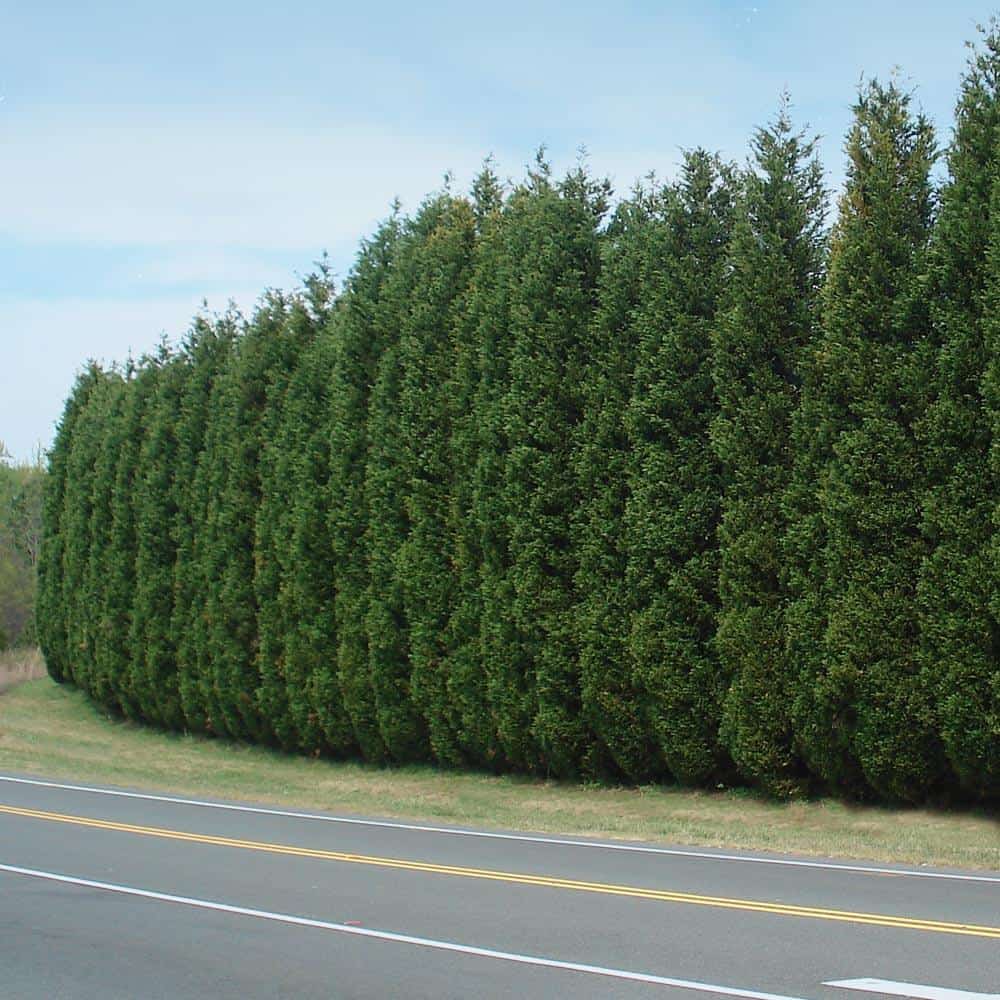
For homeowners who want a natural privacy fence quickly, Leyland Cypress is very popular. Renowned for being one of the fastest-growing evergreen trees, it can easily add three to four feet of growth per year. The dense, feathery foliage creates a solid living wall that provides a near-instant noise buffer. This is the ultimate go-to privacy tree if you need a tall, robust privacy screen without the years-long wait.
It’s a Go-To for Quick Privacy
People choose Leyland Cypress for its remarkable speed. A young plant can quickly grow into a substantial privacy hedge, a trait that is unmatched by most other evergreen shrubs. It handles a variety of soil types and has a pleasing upright form, making it a reliable workhorse for garden areas.
Its Mature Size and What It Means for You
It is a true giant. Leyland Cypress can reach a mature height of 60 to 70 feet. For a residential planting area, this means you must plan accordingly. A homeowner must commit to a regular maintenance schedule or accept a very large tree. Otherwise, its size can overpower a smaller garden area.
Pruning Techniques for a Tidy Appearance
Leyland Cypress needs consistent care to form a clean-looking hedge. Prune the sides lightly but frequently to promote density and a uniform shape. Do not cut into the old, woody parts of the tree, as it may not grow new foliage from that point. Proper pruning keeps your hedge dense from top to bottom.
3. English and Schip Laurel
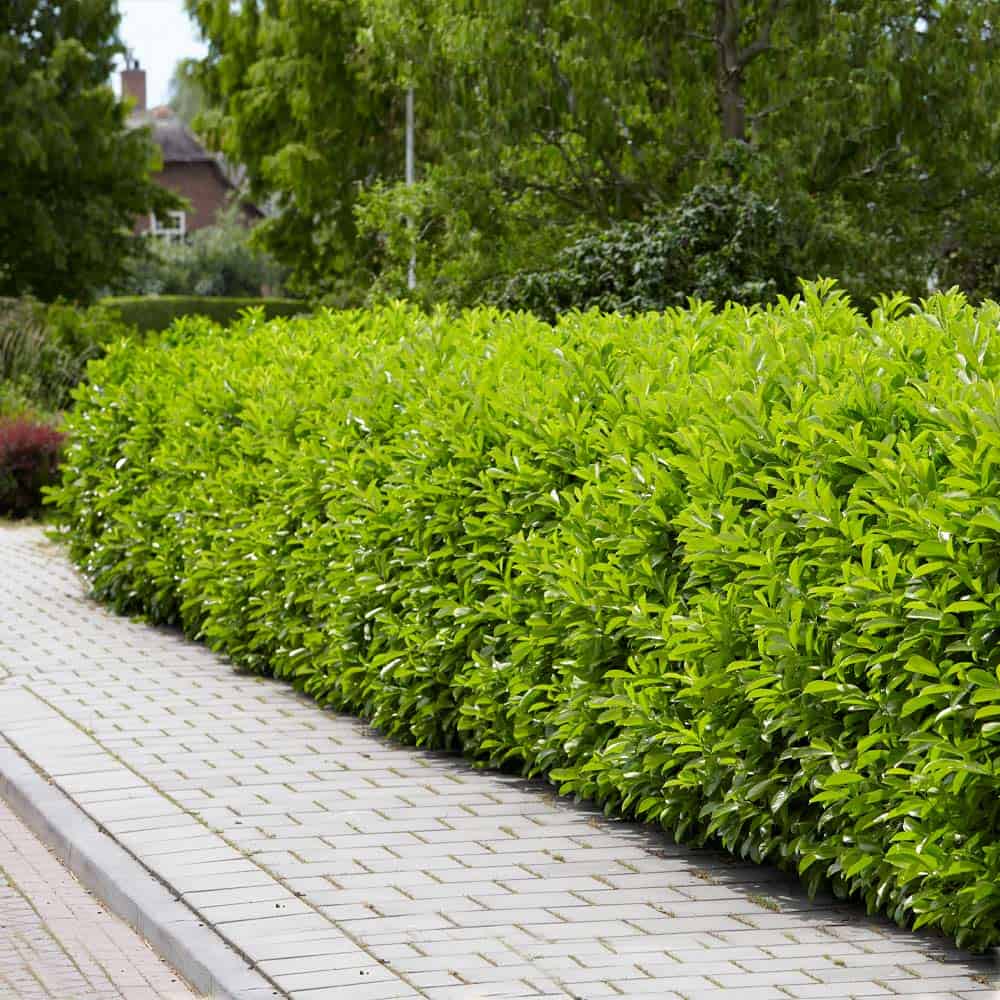
If a homeowner wants a different option from a traditional conifer privacy screen, English Laurel and Schip Laurel are great choices. As broadleaf evergreen shrubs, they offer a different texture and look than a cypress or cedar. Prunus Laurocerasus and Prunus Lusitanica both produce lush, shiny green leaves and can grow into a dense, privacy hedge. They provide year-round screening and can even produce fragrant flower clusters in the spring, adding another dimension to your winter garden.
It Is a Great Alternative to Conifers
A laurel privacy shrub offers a softer look than needle-leaf evergreens. The larger leaves create a thick, solid mass that is excellent for a privacy fence or a living wall. A laurel hedge is a good choice because it tolerates pruning well. You can shape it easily. This makes it useful in many garden areas.
Best Conditions to Help It Thrive
Laurels prefer well-draining soil types but can tolerate a wide variety of conditions. They will thrive in full sun but are also quite shade-tolerant, making them adaptable for different planting area light levels. For the fastest growth, water regularly during the first growing season. Once established, they are more drought-tolerant.
Pruning to Keep It Lush and Dense
Proper pruning is the secret to a perfect laurel hedge. Instead of using power shears, which will shred the large leaves, opt for hand pruners to make clean cuts. Cutting branches just above a leaf node will promote new growth and create a thicker, more uniform privacy hedge that maintains its beauty all year.
4. Clumping Bamboo
Clumping bamboo offers a different look for a privacy screen. Its graceful canes and lush leaves create a calm, Asian-inspired feel. It provides a unique, modern look for a privacy hedge. With a fast growth rate, it can quickly form a dense living wall. Bamboo is also one of the most effective plants for creating a strong noise buffer, as its leaves rustle to create a pleasing sound that can mask unwanted noise from a nearby street or neighbor.
Clumping Is the Only Way to Go
When selecting bamboo, the distinction between clumping and running varieties is the single most important factor. Running bamboo is highly invasive and can quickly spread out of control, invading a neighbor’s yard and causing legal disputes. Clumping varieties, however, spread slowly from the center, making them safe for residential planting areas. Due to a shipping restriction on some running types, clumping bamboo is a much better choice.
Best Species for the Pacific Northwest
Not all bamboo is cold-hardy. In Washington state, a plant expert would recommend a variety like Fargesia, which is well-suited for the region’s climate. Fargesia is a non-invasive, clumping evergreen shrub that maintains its beautiful form and color all year. Selecting a species that is rated for your specific hardiness zone is paramount for a successful outcome.
Tips for Containment and Care
Even though it clumps, a bamboo privacy hedge can still benefit from a simple containment strategy, such as a physical barrier. Water bamboo regularly, as it performs best with consistent moisture. It requires very little pruning; just thin out older culms at the base to make room for new shoots and to maintain an open, graceful appearance.
How to Get the Best Plants for Your Yard?
Finding the right evergreen trees or evergreen shrubs for your yard depends entirely on where you live. Washington state has two distinct climates, separated by the Cascade mountain range. What thrives west of the mountains might struggle in the east.
By making an informed choice for your specific USDA Zone, you will have a more successful privacy hedge and a thriving garden area. Proper selection is the difference between a plant that grows and one that truly flourishes.
Plants for Western Washington
Western Washington, with its mild, rainy climate, is ideal for a wide range of evergreen shrubs. The consistent moisture and moderate temperatures help plants like Virescens Western Red Cedar grow well. The classic Prunus Laurocerasus also does very well in these conditions. Consult resources like the Sunset Western Garden book for even more regional advice.
Plants for Eastern Washington
Eastern Washington experiences hotter, drier summers and colder winters. A successful privacy fence in this region will feature plants that are hardy and drought-tolerant once established. Consider a fast-growing evergreen tree like the Colorado Spruce or the Giant Arborvitae. Both trees can handle temperature changes. They are also good for colder hardiness zones. A native plant is also a great option here.
Shop Local for Quality Plant Stock
A local plant nursery is the best place to source your plants. They carry varieties that are already acclimatized to your region. A local plant expert can help you pick the perfect privacy shrubs or privacy trees for your specific soil type. By shopping locally, you are setting up your new privacy screen up for the greatest possible success.
Don’t Make This Planting Mistake
The biggest mistake homeowners make is assuming that after buying a fast-growing hedge, they can just put it in the ground and let it go. The truth is that proper preparation is what separates a failed privacy screen from a flourishing one. Taking the time to do a little pre-work will ensure that your new evergreen shrubs or evergreen trees have the best start possible.
Preparing Your Site the Right Way
Start with a soil test. Knowing your soil type and amending it with compost or other organic material will give your plants the nutrients they need. Proper drainage is also important. If your planting area has clay soil that holds water, consider creating a raised bed to ensure the plants do not get root rot. Do not add amendments to the hole itself, as it can discourage roots from spreading into the native soil.
The Correct Spacing for Your Plants
Incorrect spacing is a common misstep. To form a dense, privacy hedge, spacing is key. A good rule of thumb is to space the plants at half their listed width. For instance:
- For a Thuja Green Giant with a ten-foot width, space them five to seven feet apart.
- For a Leyland Cypress, plants should be spaced at least six feet apart to give each one room to grow.
- For English and Schip Laurel, space them three to five feet apart for a dense hedge.
Critical First Year Watering Schedule
A newly planted evergreen tree needs consistent watering to establish its root system. During the first growing season, watering is a full-time job. A simple drip irrigation system is a good way to give a deep, slow soak directly to the roots. Even if it rains, check the soil to make sure it is moist several inches down.
Table: Planting and Care Checklist
| Phase | Action | Details |
| Planting Preparation | Test the Soil | Amend with compost if needed. Ensure the area has proper drainage. |
| Dig a Wide Hole | The hole should be twice as wide as the root ball to allow roots to spread easily. | |
| The First Year | Water Regularly | A new plant needs consistent moisture to establish its root system. |
| Apply Mulch | A 2-3 inch layer of bark mulch will retain moisture and discourage weeds. | |
| Long-Term Care | Fertilize Annually | Use a slow-release granular fertilizer in early spring to ensure continued vigorous growth. |
| Prune as Needed | Pruning will maintain the shape and density of the hedge. |
Secret to Turbocharged Growth
After you have correctly chosen and planted your evergreen trees, the work is not quite finished. To get the impressive growth per year you are looking for, a few simple steps can make all the difference.
Simple care practices can significantly boost the growth rate of your new privacy screen, helping it to fill in quickly and create a lush living wall. A little bit of effort in the first few years pays off in the long run with a beautiful, low-maintenance privacy hedge.
Feed Your Hedge with the Right Nutrients
The right nutrients will act like rocket fuel for your evergreen shrubs. In the spring, apply a slow-release granular fertilizer formulated for trees and shrubs. Follow the directions on the package carefully. Proper nutrition will support a strong growth rate, helping your plant reach its full potential. A healthy plant will have a high growth rate each year.
The Power of Proper Mulching
Mulch is one of the best tools for your new hedge. A two- to three-inch layer of bark mulch applied around the base of the plant will help the soil type retain moisture, suppress weeds, and regulate temperature. Do not pile mulch against the trunk, as that can lead to rot and attract pests. A good layer of mulch will give your plant’s root system what it needs to develop without competition.
Avoid These Mistakes
Several common mistakes can hold your plants back.
- Avoid planting too deeply; the top of the root ball should be level with the surrounding grade.
- Do not fertilize too much, as that can burn the roots.
- Check for proper drainage. A new plant will only grow as well as its roots.
By avoiding these simple decorating mistakes, your hedge will reach its full mature height faster. You can ask a plant expert at a plant nursery for more advice on what products to use.
Table: Top Privacy Hedge Plants at-a-Glance
| Plant Name | Growth Rate | Hardiness Zones | Best For |
| Thuja Green Giant | Fast (3-5 ft/year) | 5-9 | Tall, classic screen with less maintenance than Leyland Cypress. |
| Leyland Cypress | Very Fast (3-4 ft/year) | 6-10 | Extremely quick privacy. Needs regular trimming to maintain size. |
| English & Schip Laurel | Moderate to Fast (1-3 ft/year) | 6-9 | A lush, broadleaf alternative to conifers with a different texture. |
| Clumping Bamboo | Varies (3-10 ft/year) | Varies by species | A modern look and great for small, contained spaces. |
Frequently Asked Questions
1. Are there other fast-growing evergreens I can consider?
Yes. You can use Japanese Cedar for a different texture or a columnar Sky Pencil Holly for narrow areas. A plant from the Southern Living Plant Collection can also be a unique choice for a privacy hedge.
2. Can a privacy hedge also have flowers?
Yes, you can use flowering hedges to add color to your yard. The Lavalamp Candelabra Hydrangea and the Vitex agnus-castus are great choices for a hedge that provides a seasonal show of blossoms.
3. What about planting deciduous trees for privacy?
Deciduous plants like Acer Ginnala ‘Flame’ can provide seasonal privacy. They lose their leaves in winter but offer beautiful fall color and can be planted as effective fence trees in a landscape plan.
4. Should I hire a professional for my hedge?
Hiring landscape contractors or landscape architects can save you time. A professional can provide a tailored landscape plan that works with your unique space and creates a cohesive design.
5. What should I look for when buying plants?
When purchasing a plant, look for healthy plant components like lush foliage and a strong root system. Pay attention to the staked measurement on larger specimens to get an accurate representation of their true size.
6. Can a privacy hedge be good for wildlife?
A well-chosen privacy hedge can provide food and shelter for local fauna. The National Wildlife Federation gives resources on how to choose plants. These plants support the local ecosystem. They also provide privacy for you.
Conclusion
Transforming your yard with a fast-growing privacy hedge is a rewarding project. Choose the right evergreen shrubs for your region. Prepare the planting area well. Give the plants proper care. This way, you can create a beautiful privacy screen. It will also reduce noise for many years.
Take the next step toward a more secluded outdoor space. Book a free consultation today.