
By Chris Sheer, Co-owner, Father Nature Landscapes of Tacoma
A landscape that looks exceptional in every season comes down to one thing: intentional plant selection paired with smart garden layout from the start. Year-round landscape design is not about planting more. It is about planting smarter. The right mix of blooming plants, ornamental grasses, and structural evergreens means your landscape beds are never bare, never boring, and never an embarrassment in January.
After 19 years of designing across Tacoma, Gig Harbor, and Puyallup, I can tell you the Pacific Northwest gives us more to work with than most homeowners realize. Let me show you how.
Chris’ Quick Takeaways
- Structure first, plants second. Evergreens and hardscaping carry your landscape through every season blooming plants cannot.
- A single-season garden design is the most expensive mistake a Tacoma homeowner can make.
- Your winter view from indoors matters as much as your summer curb appeal.
- Native plants outperform exotic alternatives in PNW conditions and demand far less from you in return.
- Bloom times, plant sequencing, and layering are what separate a great landscape from a forgettable one.
- Drainage and soil preparation are non-negotiable before any plant goes into the ground.
- Year-round landscape design is not a luxury. For a Pacific Northwest property, it is simply good planning.
Table of Contents
Why Most Tacoma Landscapes Look Dead for Half the Year
The Single-Season Design Trap Most Homeowners Fall Into
Most garden design decisions happen in spring, when everything looks promising. Homeowners pick plants that bloom beautifully in April and May, then wonder why their yard looks abandoned by October. I see this pattern constantly across Tacoma and Gig Harbor.
What Tacoma’s Climate Actually Demands From a Well-Built Landscape
Tacoma averages nearly 173 rainfall days per year, with December alone bringing over 18 wet days. That is a long stretch of gray, and your landscape beds need to hold their own through all of it. A well-built 4-season landscape accounts for every month, not just the pretty ones.
The Cost of a Yard That Checks Out in November
A Gig Harbor homeowner in her mid-fifties came to us frustrated. She had spent years investing in colorful annuals every spring, only to watch her yard turn into a muddy mess each winter. When we walked her property together, the issue was immediate: zero structural plant material, no ornamental grasses, no evergreen backbone. Her garden layout had never been planned beyond a single season.
After we rebuilt her landscape beds with multi-season interest in mind, she told me it was the first winter she actually enjoyed looking out her kitchen window. Poor plant selection does not just hurt curb appeal. It quietly drains your investment year after year.

Start With Structure Before You Think About a Single Plant
How Evergreens Anchor a Year-Round Landscape Design
Before a single blooming plant goes into the ground, I always ask one question: what does this yard look like in February? Evergreens answer that question. They hold color, form, and presence through every gray Pacific Northwest month, giving your year-round landscape design its backbone.
Using Plant Form and Habit as Your Design Foundation
Plant form is the shape a plant naturally takes, whether mounding, upright, spreading, or weeping. Plant habit is how it behaves over time. Together, these two qualities determine whether your garden layout feels intentional and composed or just randomly filled with whatever looked good at the nursery that weekend.
Ornamental Grasses and Trees That Hold Interest Through Winter
A Tacoma couple in their late forties had a beautifully maintained front yard from June through September. By November it was flat, brown, and forgettable. We introduced coral bark maple for its striking red winter stems, added sweeps of ornamental grasses whose seed heads catch morning light through January, and anchored the corners with broadleaf evergreens. The transformation in their winter curb appeal was immediate. Seed pods, textured bark, and frosted branches became the focal points their landscape had always been missing. Structure, not more plants, was the answer.
How to Avoid the Overcrowded, Cluttered Garden Mistake
More plant material is not always better. I have seen landscape beds so overstuffed that nothing reads clearly from the street or from indoors. Thoughtful plant groupings with intentional spacing let each element breathe, create visual rhythm, and give your landscape room to mature gracefully without turning into a thicket.
Layer Your Planting Beds for Continuous Seasonal Interest
What Planting in Layers Actually Means in Practice
Landscape layering is not complicated, but it does require planning before you plant. Think of your beds in three horizontal zones: a tall canopy layer, a mid-level shrub layer, and a low ground cover layer. Each zone plays a different role in keeping your landscape visually interesting across every season.
Succession Planting to Keep Something Blooming Each Season
Succession planting means deliberately sequencing your plant selection so that as one plant finishes blooming, another picks up. I map out bloom times before a single plant goes into the ground on any project. This approach eliminates the dead zones that make most Tacoma yards look neglected for months at a stretch.
Balancing Perennials, Shrubs, and Evergreens in One Bed
A University Place homeowner, a retired engineer in his early sixties with a sharp eye for detail, came to us wanting continuous color without the weekly maintenance burden. His existing beds were packed entirely with perennials that vanished underground each winter. We rebuilt his landscape beds using a deliberate ratio: roughly one-third evergreen shrubs for year-round structure, one-third deciduous shrubs for seasonal interest, and one-third perennials for blooming plants that return reliably each year. The result was a three-season perennial garden design plan that practically ran itself.
The Rule of Thirds That Designers Swear By
The rule of thirds is simple: no single plant category should dominate your bed. I apply this across every garden design project, regardless of size. It prevents the all-or-nothing problem where your landscape either looks lush in summer or completely bare in winter, with nothing in between.
Table: PNW Seasonal Landscape Maintenance Calendar for Tacoma Homeowners
|
Month |
Primary Focus |
Tasks |
Plant Activity |
|---|---|---|---|
|
January |
Winter structure assessment |
Check evergreen anchors, clear debris from hardscape |
Coral bark maple, winterberry holly at peak visual interest |
|
February |
Soil and drainage prep |
Test soil composition, address drainage issues before spring planting |
Ground cover begins showing early movement |
|
March |
Early spring planting |
Install new plant material, divide overcrowded perennials |
Serviceberry blooms begin, early pollinator-friendly blooms emerge |
|
April |
Bed cleanup and mulching |
Fresh mulch on landscape beds, edge borders, assess winter losses |
Peak spring bloom period across most PNW gardens |
|
May |
Succession planting |
Add summer performers to fill gaps in bloom time sequencing |
Rozanne geranium begins, ornamental grasses push new growth |
|
June |
Irrigation setup |
Activate or check irrigation ahead of Tacoma’s dry season |
Container gardens and raised bed gardening reach full production |
|
July |
Drought monitoring |
Deep water established plants, hold off on fertilizing stressed plants |
Little bluestem and sideoats grama at summer peak |
|
August |
Minimal intervention |
Spot-weed, deadhead selectively, enjoy the space |
Indian grass begins showing late summer color |
|
September |
Fall planting window |
Best month for installing shrubs and trees in PNW |
Aromatic aster blooms, fall foliage color begins building |
|
October |
Structural review |
Assess plant groupings, plan any layout changes for next season |
Ornamental grass seed heads at peak sculptural beauty |
|
November |
Winter prep |
Cut back select perennials, leave grasses standing for winter interest |
Winterberry holly berries fully developed |
|
December |
Hardscape and lighting focus |
Check outdoor lighting, enjoy water features and winter plant interest |
Coral bark maple stems, frosted branches, evergreen mass carry the season |
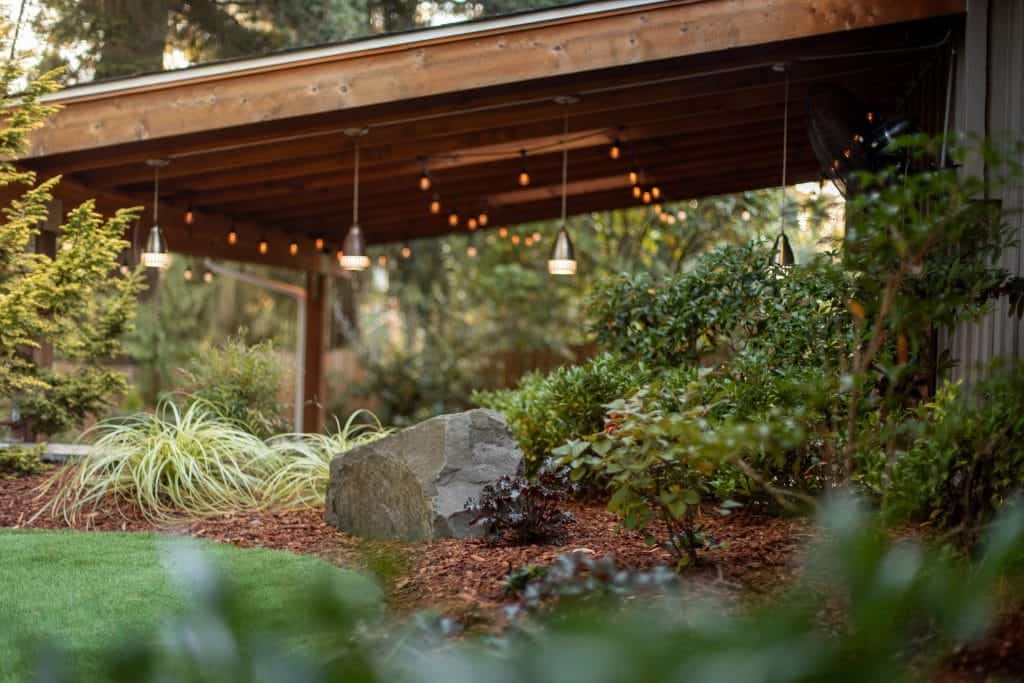
The Best Plants for Year-Round Landscape Design in the Pacific Northwest
Spring Showstoppers That Set the Tone Early
Spring in the Pacific Northwest is genuinely spectacular if your plant selection is right. I lean heavily on autumn brilliance serviceberry for its early white blooms and reliable multi-season interest, alongside pollinator-friendly blooms like Rozanne geranium that carry color deep into summer. These are not just pretty plants. They set the structural and visual tone for everything that follows.
Summer Plants That Thrive in Tacoma’s Dry Season
Tacoma summers are drier than most people expect, and plants that cannot handle that shift become a maintenance headache fast. I consistently recommend drought-tolerant native plants like little bluestem and aromatic aster for their summer resilience and late-season color. A peer-reviewed 2024 study published in Urban Ecosystems confirmed that native plants support significantly higher pollinator abundance and ecosystem diversity compared to non-native alternatives, making them the smarter long-term choice for PNW landscape design.
Fall Foliage and Texture Worth Planning Around
Fall is honestly one of the most underused seasons in garden design, and that is a missed opportunity. Indian grass and sideoats grama bring warm amber tones and movement to landscape beds well into October and November. Pair these with shrubs selected for fall foliage color and you have a yard that peaks twice. Once in spring and again when everything else in the neighborhood goes flat.
Winter Plants That Make Neighbors Stop and Look
A Puyallup couple renovating their forever home in 2022 specifically asked for a winter garden that would impress during the holidays. We built their plant list around winterberry holly for its vivid red berries, coral bark maple for sculptural beauty and striking stem color, and broadleaf evergreens for consistent mass and texture. Their neighbors actually knocked on the door in January to ask who designed it. Winter garden plants with genuine visual impact are rarely complicated. They just require intentional planning from the start.
Table: PNW Plant Selection Guide for Year-Round Landscape Design
|
Plant Name |
Type |
Season of Peak Interest |
Feature Color |
Drought-Tolerant |
Shade-Tolerant |
Used As |
|---|---|---|---|---|---|---|
|
Coral Bark Maple |
Deciduous Tree |
Winter |
Red stems |
Moderate |
No |
Focal point, structural anchor |
|
Autumn Brilliance Serviceberry |
Small Tree |
Spring + Fall |
White blooms, red fall color |
Yes |
Partial |
Multi-season anchor, pollinator plant |
|
Winterberry Holly |
Deciduous Shrub |
Winter |
Red berries |
No |
Partial |
Winter interest, wildlife habitat |
|
Little Bluestem |
Ornamental Grass |
Summer + Fall |
Copper, bronze |
Yes |
No |
Mass planting, landscape beds |
|
Sideoats Grama |
Ornamental Grass |
Summer + Fall |
Tan seed heads |
Yes |
No |
Slopes, hillside landscaping |
|
Indian Grass |
Ornamental Grass |
Fall + Winter |
Golden yellow |
Yes |
No |
Back of border, structural layer |
|
Aromatic Aster |
Perennial |
Fall |
Purple |
Yes |
No |
Pollinator-friendly border plant |
|
Rozanne Geranium |
Perennial |
Spring through Fall |
Violet blue |
Moderate |
Partial |
Ground cover, front of border |
|
Broadleaf Evergreen Shrubs |
Evergreen Shrub |
Year-Round |
Green foliage |
Moderate |
Yes |
Shade gardens, structural backbone |
|
Ornamental Grasses (mixed) |
Grass |
Fall + Winter |
Varied |
Yes |
No |
Texture, movement, seed head interest |
Use Hardscaping to Carry Your Landscape When Plants Go Quiet
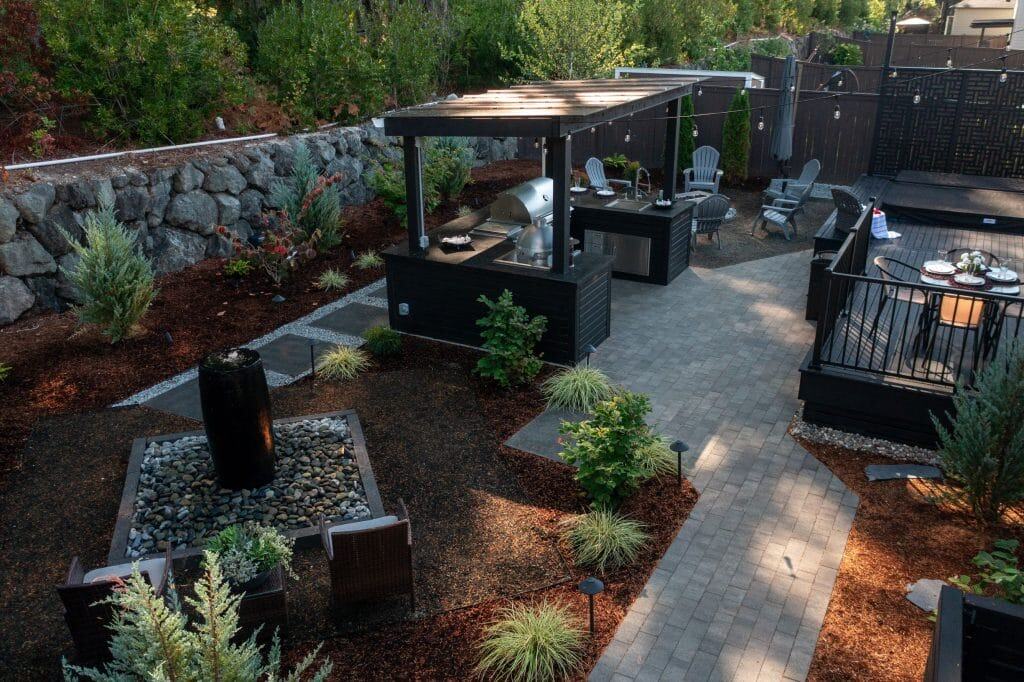
Patios, Pathways, and Pavers That Add Structure in Every Season
Plants are seasonal by nature, but hardscaping never takes a day off. A well-designed patio or stone pathway holds your garden layout together through every gray November and wet February Tacoma throws at it. According to 2024 data from the Journal of Light Construction, a new wood deck recoups an average of 82.9% of its cost, making hardscaping one of the smartest investments a homeowner can make.
Covered Structures That Make Outdoor Spaces Usable Year-Round
A pergola or covered outdoor structure is not a luxury in the Pacific Northwest. It is practically a necessity. I have designed dozens of outdoor living spaces across Gig Harbor and Tacoma where a well-placed covered structure extended the usable season by four to five months. Without one, even the most beautiful landscape design becomes something you admire strictly from indoors for half the year.
Outdoor Lighting That Works Harder During Short PNW Days
December days in Tacoma can feel like they are over before they started. Landscape lighting gives your outdoor space a presence after dark that plants simply cannot provide on their own. A Tacoma homeowner in her early fifties, a busy healthcare professional who rarely got home before six, told us that our lighting installation was the single upgrade that made her feel like she could actually enjoy her property year-round.
Water Features That Add Sound and Life Through the Gray Months
Running water does something to a space that no plant or paver can replicate. Even on the coldest, grayest PNW days, a well-placed water feature adds movement, calming natural sound, and a focal point that draws the eye. I recommend these consistently for clients who want their landscape to feel alive and sensory, not just visually attractive when the sun finally shows up.
Design From the Inside Out for Winter Curb Appeal
Framing Your Garden as a View From Indoors
Most homeowners design their landscape from the street looking in. I always flip that around and start from inside the house looking out. Research from Harvard T.H. Chan School of Public Health published in January 2024 found that exposure to green space, even when viewed from indoors, is linked to lower anxiety, better sleep, and reduced blood pressure. Your winter garden is not just curb appeal. It is a daily health asset.
Placing High-Interest Plants Where They Are Seen Most Often
Before finalizing any plant list, I walk through the home and identify the key sightlines. Here is the exact process I use on every project:
- Stand at the kitchen sink and note what is directly in your eyeline
- Sit at the dining table and identify the dominant outdoor view
- Check the primary bedroom window for morning sightlines
- Walk the front entry approach and assess what greets you daily
High-interest plants like coral bark maple, winterberry holly, and ornamental grasses with prominent seed heads go into these sightlines first. Everything else fills in around them.
How Front Yard Composition Affects Property Value in All Seasons
A Gig Harbor homeowner in his mid-forties, a small business owner with strong pride of ownership, asked us to prioritize resale value in his redesign. We focused his front yard composition around three principles:
- Continuous color from at least three distinct plant layers
- Strong evergreen anchors visible from the street in every season
- Hardscape elements that frame the entry and add structure when blooming plants rest
The result was a front yard that read as polished and intentional year-round. Virginia Tech research confirms that upgrading a landscape from average to excellent can increase a home’s value by 10 to 12 percent. For a $500,000 Tacoma property, that is a potential gain of up to $60,000.
Native and Drought-Tolerant Plants That Pull Double Duty in the PNW
PNW Natives With Multi-Season Appeal for Tacoma Gardens
Native plants are not a compromise. They are frequently the best performing option in any four-season garden design across the Pacific Northwest. I regularly build plant lists around autumn brilliance serviceberry for spring blooms and fall color, aromatic aster for late-season pollinator-friendly blooms, and little bluestem for its warm copper tones that carry well into winter.
Drought-Tolerant Choices That Still Perform in Wet Winters
A newly married couple in their thirties had just purchased a larger property in University Place and wanted a low-maintenance landscape that would not punish them during Tacoma’s dry summers or drown during its wet winters. We designed their garden entirely around drought-tolerant native plants that handle both extremes without complaint. Sideoats grama and Indian grass gave them summer texture and seed head interest through fall, and the landscape has needed minimal intervention in the two years since installation.
How Native Plants Reduce Maintenance Without Sacrificing Beauty
A 2025 peer-reviewed study published in Urban Ecosystems analyzed over 100,000 observations across 129 urban green spaces and found that a higher proportion of native plant species directly predicts greater pollinator richness in urban landscapes. That means your garden works harder for local ecosystems without you working harder in it. In my experience, a well-planned native plant landscape requires a fraction of the seasonal intervention that a conventional blooming plant scheme demands, freeing up your weekends without sacrificing beauty or multi-season interest.
Common Year-Round Landscape Design Mistakes Tacoma Homeowners Make
1. Planting Too Many Annuals With No Structural Backbone
Annuals are tempting because they bloom fast and look great at the nursery in April. But a landscape built entirely on annuals has no memory. Every winter it disappears, and every spring you start from scratch, spending time and money to rebuild something that never actually grows into anything. The most common garden design mistake I see across Tacoma properties comes down to this exact pattern.
2. Ignoring Drainage and Soil Prep Before Choosing Plants
A Tacoma homeowner in her late forties, a landscape enthusiast who had spent years refining her garden design ideas independently, called us after losing three consecutive rounds of carefully chosen plants to root rot. The culprit was not her plant selection. It was consistently poor drainage that no amount of good plant material could overcome. Here is what proper site preparation covers before any planting begins:
- Soil composition testing to identify clay-heavy or compacted areas
- Grading assessment to confirm water moves away from plant root zones
- Drainage solution installation where standing water is identified
- Organic amendment integration to improve soil structure and long-term plant health
Skipping these steps is the fastest way to turn a solid plant list into an expensive lesson.
3. Skipping the Professional Design Phase and Paying for It Later
Virginia Tech research found that poor landscaping can decrease property values by up to 10 percent. On a $500,000 Tacoma home, that is a $50,000 hit that a proper design phase would have prevented. I have rebuilt dozens of landscapes across Gig Harbor and Puyallup where the original work was done without a real design plan. The pattern is always the same: wrong plants in wrong positions, no seasonal sequencing, and a garden layout that costs significantly more to fix than it would have cost to plan correctly from the start.
How Father Nature Landscapes Builds Properties That Look Exceptional Every Month of the Year
Our Design Process for Year-Round Landscape Design
Our projects start with a genuine conversation, not a sales pitch. We learn how you use your outdoor space, what you see from inside your home, and what has frustrated you about your yard in the past. From there, we build a complete four-season garden design plan with 3D visualization, precise plant sequencing, and hardscape integration before a single shovel hits the ground.
What 19 Years and 500+ Projects Taught Us About PNW Seasonal Design
Years of working across Tacoma, Gig Harbor, and Puyallup has given us something no garden planner kit or plant database can replicate. We know which plants perform through a Tacoma winter, which ones collapse in University Place clay soil, and which landscape design ideas look great in theory but fail in a PNW summer. That knowledge is built into every recommendation we make.
Here is what consistently separates our projects from the rest:
- Plant selection rooted in real PNW performance data, not nursery marketing
- Seasonal sequencing planned across all four months, not just spring
- Soil and drainage assessment completed before any plant material is chosen
- Hardscape and softscape designed together as one integrated system
What to Expect When You Work With Our Team
Our uniformed crews arrive on schedule, every time. We are licensed, bonded, insured, and every team member is background-checked. From your first free consultation through installation and ongoing maintenance, you deal with one trusted team that knows your property and takes pride in how it performs year-round.
Schedule Your Free Consultation
Your property deserves to look exceptional in every season, not just April and May. We serve homeowners across Tacoma, Gig Harbor, Puyallup, and University Place who are ready to stop settling for a landscape that checks out in November. Call us at (253) 761-6437 or book online now to schedule your free consultation today.
Frequently Asked Questions
1. Can year-round landscape design work for small gardens in Tacoma?
Absolutely. Small gardens actually benefit most from intentional seasonal planning because every plant has to earn its place. Layering plant texture and choosing compact multi-season performers makes even a modest space look purposeful year-round.
2. Do I need a registered landscape architect for year-round landscape design?
Not necessarily. A highly experienced landscape contractor with proven PNW design expertise can deliver exceptional results. What matters most is that whoever designs your space understands local soil, climate, and plant performance across all four seasons.
3. How do I add color in the garden during the darkest PNW months?
Winter color comes from berries, bark, and evergreen foliage rather than blooms. Thoughtful plant selection built around a deliberate color scheme, including plants like coral bark maple and winterberry holly, keeps your landscape visually engaging through the gray months.
4. Can shade gardens achieve genuine year-round interest?
Yes, and shade gardens are honestly some of my favorites to design. The right combination of shade-tolerant evergreens, seasonal ground cover, and textured foliage plants creates layered plant interest that holds up beautifully even without direct sunlight.
5. What role do container gardens play in a four-season landscape?
Container gardens are a flexible tool for adding seasonal color exactly where you need it most. Swapping container plantings with the season of blooming in mind keeps entryways, patios, and key sightlines looking intentional and fresh year-round.
6. Is hillside landscaping harder to design for year-round interest?
Hillside landscaping presents real drainage and erosion challenges that affect plant selection significantly. With the right ground cover, native plants, and structural shrubs chosen for slope performance, a hillside can become one of the most visually dramatic features on your property across every season.
7. Can I incorporate garden art and decor into a year-round landscape design?
Garden art and decor work especially well during winter months when plant interest is naturally lower. Sculptural elements, decorative containers, and thoughtfully placed garden features fill visual gaps and add personality to your outdoor space when blooming plants step back.
8. What are the best tips for gardening at home to maintain year-round interest without professional help?
The most practical tips for gardening at home center on plant sequencing and restraint. Choose plants with at least two seasons of interest, resist overplanting annuals, and build your beds around a structural evergreen backbone before adding seasonal color on top.
9. Does raised bed gardening fit into a year-round landscape design plan?
Raised bed gardening integrates well into a broader landscape design when positioned and planted with seasonal sequencing in mind. Choosing blooming plants and edible crops that rotate across seasons keeps raised beds productive and visually interesting rather than sitting empty for months.
10. How do vertical gardens contribute to year-round landscape interest?
Vertical gardens add a dimension that traditional landscape beds cannot, particularly on smaller urban Tacoma properties with limited square footage. Choosing evergreen climbing plants and seasonal vines with staggered bloom times means your vertical elements contribute genuine plant interest across spring, summer, fall, and winter.
Conclusion
A landscape that looks exceptional every month of the year does not happen by accident. It starts with the right plan, the right plant selection, and a team that genuinely understands Pacific Northwest conditions across all four seasons. At Father Nature Landscapes, we have been building outdoor sanctuaries across Tacoma, Gig Harbor, and Puyallup since 2006.